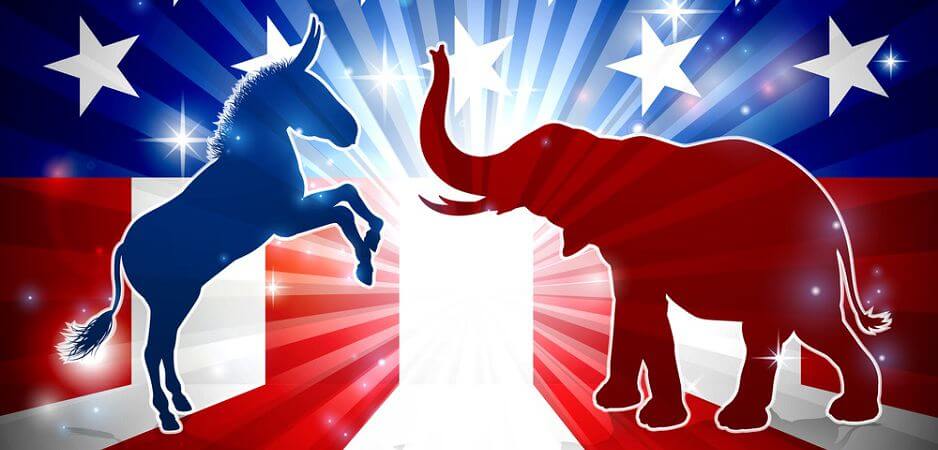
Washington, D.C.: A string of progressive victories in Democratic primary elections has sparked fresh debate about the future of the Democratic Party, highlighting growing tensions between the party’s established leadership and a new generation of candidates seeking political change.
The discussion gained renewed attention following several high-profile primary contests in New York, where progressive and democratic socialist candidates scored notable victories, prompting broader questions about leadership, representation and the direction of the party ahead of the 2028 presidential election cycle.

Claire Valdez Victory Signals Progressive Momentum
One of the most closely watched races saw democratic socialist Claire Valdez secure a decisive primary victory over a candidate backed by the Democratic establishment. The result was celebrated by progressive activists as evidence of growing grassroots support for candidates focused on economic inequality, housing affordability, healthcare reform and government accountability.
The victory quickly became symbolic of a larger movement within the party. During post-election celebrations, some supporters directed chants toward House Democratic leader Hakeem Jeffries, suggesting that even some of the party’s most influential figures could face future challenges from progressive candidates.
The episode underscored the increasingly visible divide between activists seeking structural political change and party leaders who have traditionally shaped Democratic strategy at the national level.
Questions Surround Future Party Leadership
The debate over leadership intensified as Democrats look ahead to future congressional elections and the next presidential cycle.
Representative Gregory Meeks expressed concern about criticism directed at Jeffries, emphasizing the significance of his leadership role within the party. If Democrats regain control of the House of Representatives, Jeffries is widely regarded as a leading candidate to become the first Black Speaker of the House in American history.
Supporters of the current leadership argue that experienced lawmakers remain essential to maintaining party unity and advancing legislative priorities. Others believe the recent primary results demonstrate a growing appetite among voters for newer voices and different approaches to governance.
When asked whether he anticipated facing a primary challenge himself, Jeffries dismissed speculation and declined to engage in a detailed discussion of the issue.
Economic Concerns Driving Progressive Campaigns
Political analysts note that many of the successful progressive campaigns have focused less on internal party politics and more on issues directly affecting voters’ daily lives.
Topics such as rising living costs, housing shortages, healthcare access, wages and government accountability have become central themes in many races. These issues have resonated particularly strongly with younger voters and communities seeking solutions to long-standing economic challenges.
Juan Proaño, Chief Executive Officer of the League of United Latin American Citizens (LULAC), described the current political moment as an opportunity for a new generation of leaders to emerge while acknowledging that the party’s ongoing transition remains complex.
Traditional Political Networks Face New Challenges
For decades, Black and Latino political organizations played a crucial role in expanding Democratic influence and advancing civil rights protections. Many of today’s senior Democratic leaders built their political careers through these organizations and community networks.
However, some strategists believe those structures are now facing pressure from changing voter expectations.
Dallas Jones, who worked on former President Joe Biden’s 2020 presidential campaign in Texas, argued that many minority communities remain connected to long-established political traditions, while younger voters increasingly demand faster change and more direct responses to economic concerns.

A recent example emerged in Texas, where longtime Representative Al Green was defeated in a primary election by Christian Menefee, a younger Democratic leader representing the same majority-Black congressional district. The result was widely viewed as another sign of generational change within the party.
Progressive Candidates Expand Their Appeal
Supporters of the progressive movement reject suggestions that their success is based solely on demographic shifts among Democratic voters. Instead, they argue that growing dissatisfaction with establishment politics has become a powerful motivating factor across a wide range of communities.
Recent victories in majority-minority districts in New York, Pennsylvania and New Jersey have strengthened the argument that progressive candidates are attracting support from diverse voter groups.
Political strategist Regina Monge said voters increasingly expect elected officials to produce measurable improvements in their communities. According to Monge, constituents are placing greater emphasis on visible results and policy outcomes rather than seniority or political longevity.
New York Becomes a National Battleground for Ideas
Several New York primary contests became national focal points in the debate over the Democratic Party’s future.
In addition to Claire Valdez’s victory, democratic socialist Darializa Avila Chevalier defeated Representative Adriano Espaillat in another closely watched race. The results were viewed by many observers as evidence of the growing organizational strength of progressive activists within the party.
Katharine Pichardo, representing Latino Victory, said voters are increasingly focused on practical concerns affecting everyday life, including economic uncertainty, affordability challenges and broader political instability. She noted that voters are demanding clear policy solutions rather than ideological rhetoric.
Calls for Unity After Divisive Primaries
Despite the ideological differences highlighted during the primaries, many Democratic leaders and analysts are urging unity as the party prepares for future elections.
Basil Smikle, former Executive Director of the New York State Democratic Party, argued that party leaders should acknowledge the momentum behind newer candidates rather than resist it. He suggested that cooperation between experienced lawmakers and emerging progressive leaders could strengthen the Democratic coalition and improve its electoral prospects.
Jeffries appeared to embrace a similar message following the primary results. He publicly congratulated Democratic nominees, including Claire Valdez and Darializa Avila Chevalier, and emphasized the importance of working together despite policy differences.
Rather than revisiting disputes from the primary campaign, Jeffries focused on building a united front against what he described as far-right political forces and preparing the party for future electoral contests.
A Defining Moment for Democrats
The recent primary victories have become more than individual electoral successes. They have evolved into a broader conversation about leadership, generational change, representation and the future identity of the Democratic Party.
As Democrats look ahead to congressional races and the 2028 presidential election, the challenge will be balancing the energy of progressive newcomers with the experience of established leaders. How successfully the party navigates that balance may shape not only its own future but also the broader direction of American politics in the years ahead.